
“You better hold on tight, spider monkey,” Edward Cullen wryly quips moments before whisking a swooning Bella Swan through lush forest canopy in a thrilling show of seduction. The oft satirized epigram in fact marks a watershed moment in the young lovers’ relationship, as well as reconciling the central themes of what is now widely regarded as a keystone of 21st century literature.
In this essay, I will be dissecting the phrases, “hold on tight” and “spider monkey,” in order to demonstrate that this bon mot helped define the literary and cinematic topography of the late 2000s, while capturing the hearts and setting ablaze the loins of a generation. What is Stephanie Meyer’s Twilight if not the finest example of the modern vampire genre? Allow me to guide you through the opus that shaped the identities of adolescents worldwide.
I invite you to imagine, if you will, the events leading up to this pivotal scene. Our young couple has daringly made public their controversial relationship, and braved the universally relatable ordeal of meeting the parents. Having passed these milestones, Edward seeks to celebrate in the way he best knows, in a theatrical and gravity-defying display of impossible speed and strength.
Spider monkeys are native to the tropical rainforests of Central and South America. It is perhaps the jarring disparity between the deep temperate rainforest setting of Forks, a lumber-producing region, and the incongruous appearance of the “spider monkey,” which defies logic to have strayed so far from its tropical rainforest home, that elicits such mirth from the audience. There are few films with as recognizable a colour board as Twilight, and arguably fewer still as redolent of the pubescent anguish of first love, so masterfully has the film exploited the emotive power of colour. Bella’s realm is drenched in a muted earthy palette of slate blues, pine greens, and umber browns, evoking alternating sinister and melancholy moods, even as Edward turns to Bella with an uncharacteristically playful gleam in his now warm amber eyes.
This affectionate sentiment is later echoed during the Cullens’ baseball outing, where Rosalie expresses her pride in Emmet by fondly declaring him as “my monkey man,” after a particularly skillful ascent up a tree to retrieve a baseball. At the same time, a return to an ancient animalistic world is signalled, where the cannibalistic “cold ones” and werewolves are greater than just legend. Here in this arena, age-old battles are waged between wolves and demons, lions and lambs, humans and their humanity. If Edward is unable to suppress his thirst for Bella’s blood, then he is little more than a primate. Twilight sees Edward crippled by his warring desire for Bella as a lover and as prey, his conscience burdened by his rigidly dichotomous philosophy of piety. It is, at its heart, a tale of good and evil, virtue and sin.
We now examine the implications behind “you better hold on tight.” Both a warning and a plea, Edward’s pithy command conveys a feeling of whimsy with an undertone of foreboding. The menace of his words offset by his endearment, “spider monkey,” offers a glimpse into his ever-escalating internal conflict. Bella is instructed to hold on tight – but onto what, exactly? Edward’s body, in a literal sense? His presence? Her own flimsy humanity? Is this an omen of Edward’s departure in the next installment, New Moon? Is it a projection of his wishes for Bella’s soul and its growing pollution as she spends more time with him? Or is it, perhaps, symbolic of his suffocation and torment, as their blossoming relationship heralds the promise of his being loved, while he faces the mortifying ordeal of being known?
Despite his immense age, power, and knowledge, Edward has never truly fully experienced the pains of adolescence, trapped eternally at 17. For a century, the Cullens have existed peacefully in in the same way, with their cyclical nomadism and self-isolation. In this way, Edward is simultaneously encumbered by Bella’s physical weight and her arms gripping his torso, as well as the yoke of his existential despair when she enters and disrupts his life. Twilight, a bildungsroman of sorts, depicts the struggle of the individual in coming to terms with what one believes to be fact, and the unknowability and unpredictability of life.
Alternatively, we may also interpret it as an expression of Bella’s lack of agency, despite her emerging freedom and independence as a young person. Within their relationship, Edward is the initiator – the masochistic lion – and Bella, the docile and pliable lamb. These biblical references allude to Meyer’s own Christian values, as well as pervasive societal norms, where gender roles traditionally impart a nurturing role to the feminine persona, whereas masculinity is associated with decision, action, and control.
Bella is disempowered, at the mercy of the supernatural forces in Forks, at least until she consumes the forbidden fruit – that is, she perverts herself by obtaining immortality. Edward’s statement speaks to their rising comprehension of the inevitable: that in order to become part of his world, Bella can no longer “hold on tight” to her humanity, and must relinquish her soul.
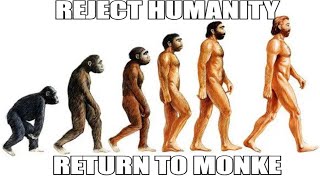
A searing insight into the complexities of mortality, love, and identity in the setting of a small town, Edward’s offhandedly uttered words to his one true spider monkey carry an impact far beyond our initial perception. It speaks to the ageless struggle of existence and the futility of our flailing attempts to resist. Ultimately, one thing remains clear and inescapable: reject humanity, return to monke.
 Come Get Y'all Juice-inta